← Site↓ PDF
People learning about neuroendocrine cancer together at a NECNZ Patient Education Day

World Neuroendocrine Cancer Day · 10 November 2026

The invisible cancer

Misdiagnosed. Misunderstood. Managed too late.

How New Zealand can do better for the thousands of Kiwis living with neuroendocrine cancer. An earlier diagnosis means earlier treatment, more options and more years lived well.

550+New Zealanders diagnosed with neuroendocrine cancer every year.5
4.7 yrson average from first symptom to diagnosis for New Zealand patients (SCAN 2025).
11.8doctor visits on average before a correct diagnosis, in international research.

A report from Neuroendocrine Cancer New Zealand · November 2026

Begin
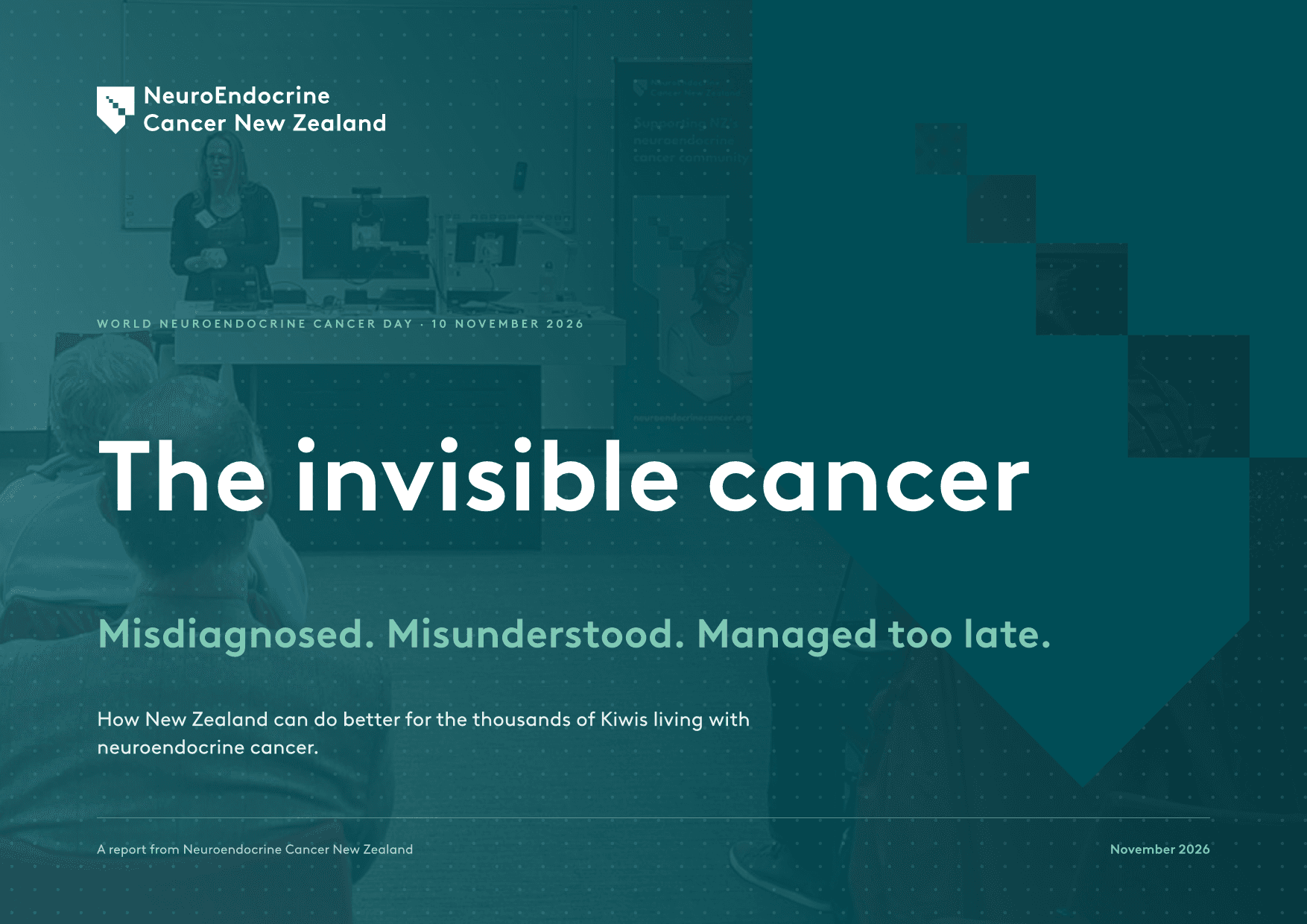
Cover of The invisible cancer: Misdiagnosed. Misunderstood. Managed too late. A report from Neuroendocrine Cancer New Zealand, November 2026

The full report

The invisible cancer, November 2026

Twenty pages, A4 landscape, to print or share. The symptoms checklist also prints on its own.

Executive summary

550+

Every year, more than 550 people in New Zealand are diagnosed with neuroendocrine cancer5 – that’s more than the number diagnosed with ovarian, liver, brain or stomach cancer each year.

Neuroendocrine cancer: what Kiwis need to know

Too often, it’s missed

All over New Zealand, Kiwis with neuroendocrine cancer symptoms are visiting a doctor an average of nearly twelve times before anyone puts the pieces together.2

It looks like everyday conditions

Neuroendocrine cancer is often mistaken for everyday conditions, and many people wait years for the right answer.

It can be invisible

Plenty of people look well even with advanced cancer, so their symptoms get brushed off or underestimated.

Earlier diagnosis is a game-changer

Even when the cancer has spread, there are treatments that can improve symptoms and extend life.

Read the full summary

Neuroendocrine cancer is an umbrella term for a group of individually rare cancers, but it’s likely more common than the official numbers suggest. Diagnoses have been climbing steadily, and they’re still heading up.

Too often, it’s missed

Getting diagnosed late is one of the biggest challenges. All over New Zealand, Kiwis with neuroendocrine cancer symptoms are visiting a doctor an average of nearly twelve times before anyone puts the pieces together.2 The consequence of delayed diagnosis is that the cancer is often at an advanced stage (Stage 3 or 4), which limits treatment options and adds to the physical, emotional and clinical load.

At the heart of it is a lack of awareness. Neuroendocrine cancer is a complex, varied group of cancers that can look very different from person to person. Symptoms can mimic everyday conditions like irritable bowel syndrome, asthma, anxiety and menopause. It’s easy to miss.

Neuroendocrine cancer is often mistaken for everyday conditions, and many people wait years for the right answer.

It doesn’t help that the disease can be invisible. Plenty of people look well even with advanced cancer, so their symptoms get brushed off or underestimated. That can be isolating and push treatment back even further. Access to therapies that could slow progression and ease symptoms can also be a hurdle, with many treatments not publicly funded in New Zealand.

This report sets out the challenges patients face, the urgent need for earlier diagnosis and improved access to specialist care and treatment options. It shines a light on the gaps in understanding, spells out what delays cost people, and backs the case for getting every patient in front of specialists who really know this group of cancers.

Earlier diagnosis is a game-changer. Even when the cancer has spread, there are treatments that can improve symptoms and extend life. We hope this report brings some clarity and hope to anyone facing multiple misdiagnoses, cancer that has already spread, and limited treatment options.

Foreword

Bringing this cancer out of the shadows

It doesn’t have to be this way. Neuroendocrine cancer doesn’t have to be invisible.

Read Michelle’s full foreword

Since 2012 Neuroendocrine Cancer New Zealand (NECNZ) has walked alongside people living with neuroendocrine cancer, and the whānau, friends and carers who support them. We listen to their experiences, share their stories, and provide information they can trust. We also push for change to get better diagnostics, new treatments and locally-led research. We are grateful to the healthcare professionals with specialist knowledge of neuroendocrine cancers, who are behind us every step of the way. Thanks to our collective efforts, New Zealand has gone from no specialist scanner and no PRRT to some of the best access to scans and PRRT in the world – in under a decade. Real progress has been made, and it has made a real difference.

But neuroendocrine cancer is still not well recognised or understood, by the wider healthcare community or by the public. It’s complex, and that means it’s often misdiagnosed. Research shows it still takes nearly five years on average to get a correct diagnosis.1

Delays, misdiagnoses, and inconsistent care cause serious and lasting harm. Precious time is lost while people live with crippling symptoms and the cancer keeps progressing when they should be getting the diagnosis and treatment they need. Patients and whānau tell us they live with isolation and fear, and that they’re left without support just when they need it most. It doesn’t have to be this way. Neuroendocrine cancer doesn’t have to be invisible.

Late diagnosis means advanced disease and more complex treatments. This takes a toll on patients and their whānau, and on our health system too. That’s why we need to make neuroendocrine cancer more visible. Better understanding leads to earlier diagnosis, more chance of a cure, and more time with loved ones.

This World Neuroendocrine Cancer Day, we’re raising awareness so New Zealanders can be diagnosed sooner, get timely treatment and the support they desperately need. Let’s make this invisible cancer visible.
Dr Michelle Sullivan, Chief Executive of Neuroendocrine Cancer New Zealand

Dr Michelle Sullivan Chief Executive, Neuroendocrine Cancer New Zealand

A clinician’s foreword

Invisible cancer, invisible messengers

Dr Veronica Boyle, endocrinologist and co-chair of the national NET MDM

Dr Veronica BoyleEndocrinologist at Waikato & Auckland City hospitalsCo-Chair, National Neuroendocrine Cancer Multidisciplinary Meeting (NET-MDM)Medical Advisor and Board member, Neuroendocrine Cancer New Zealand

As an endocrinologist my work is focused on the body’s chemical messengers: hormones. There are many different hormones doing many different roles to keep the body running smoothly. In a patient with neuroendocrine cancer, that system can be thrown into chaos.

Many of my patients tell me they’ve spent years feeling unwell while looking perfectly fine.
Read Dr Boyle’s full foreword

Neuroendocrine cancers arise from hormone-producing cells, and many of them release hormones in excess. The result can be flushing, diarrhoea, palpitations, wheezing, and overwhelming fatigue, symptoms that can be relentless and life-limiting. Yet from the outside, so much of this is invisible. Symptoms that come and go are easily mistaken for more common conditions. Commonly requested blood tests can look unremarkable, and special tests are usually needed to make the diagnosis. Many of my patients tell me they’ve spent years feeling unwell while looking perfectly fine. These hormonal signals are subtle, and it often takes a multidisciplinary approach to decipher what’s happening in the body.

Through my research I’m looking for ways to better understand what these tumours are doing and why, so we can recognise the earliest hormonal clues, treat symptoms more effectively, and give patients answers sooner. But this is an uncommon cancer so we often miss out on the big research funding that goes to more familiar ones. In that sense, they’re hidden in another way: overlooked by the very systems that could help us understand them better.

Our patients live with a cancer that is invisible to the people around them, producing symptoms that are invisible to the naked eye, and too often invisible to the funding that could change things. That’s why I keep pushing to shine a spotlight on neuroendocrine cancers – so that what is hidden today can be seen, understood and treated much sooner.

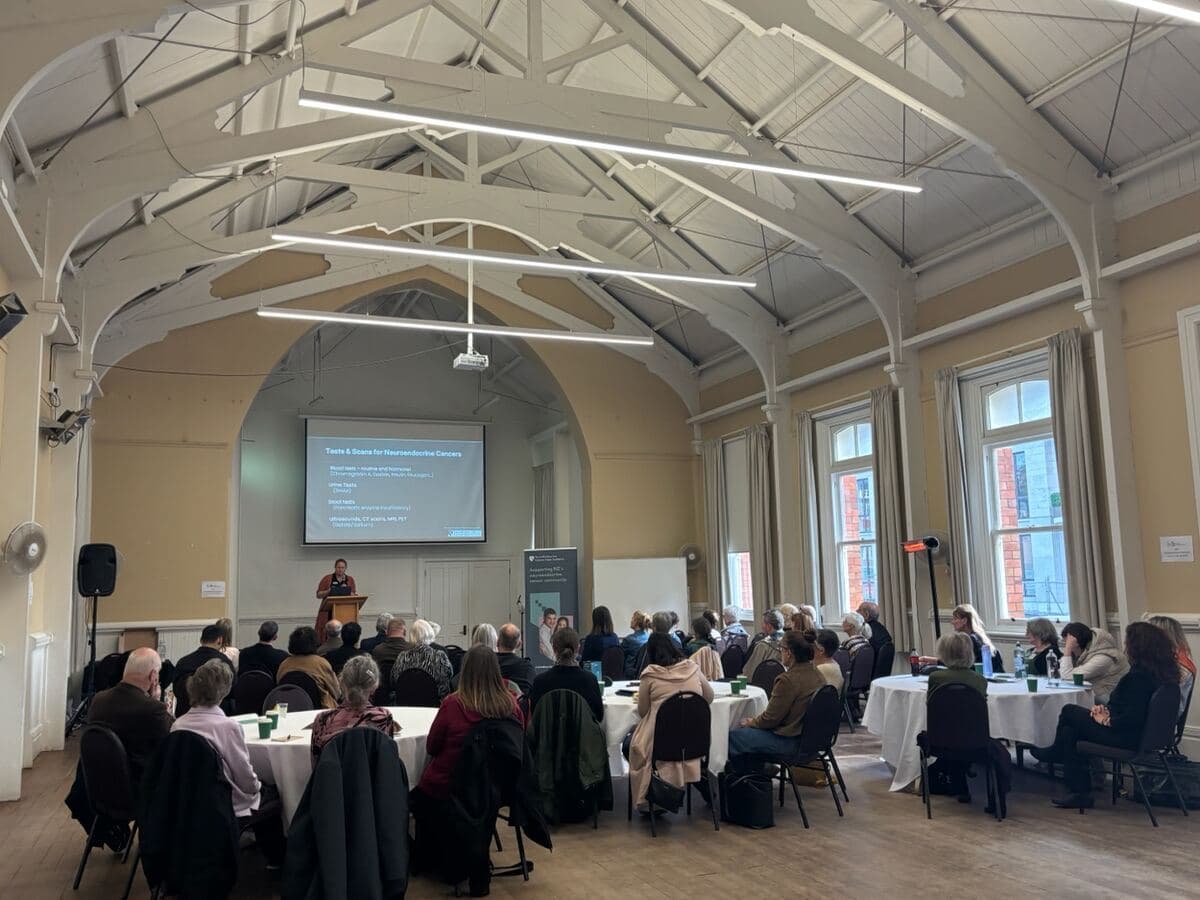
A full room listening to a specialist panel at the 2024 NECNZ Education Day
MDM session at the 2024 Education Day

New Zealand has gone from no specialist scanner and no PRRT to some of the best access to scans and PRRT in the world – in under a decade.

Dr Michelle Sullivan, foreword

What New Zealand has going for it

New Zealand’s best weapon – a national NET MDM

MDM is a multidisciplinary meeting: specialists from different fields reviewing a patient’s case together and agreeing the best plan.

The right diagnosis changes everything. New Zealand has a world-leading national NET MDM to help clinical teams all over the country answer the question of what’s next for treatment, care plans, and on-going support.

How the national MDM works

New Zealand’s national neuroendocrine tumour (NET) multidisciplinary meeting (MDM) is a regular collaborative forum where leading specialists from diverse fields such as pathology, radiology, oncology, endocrinology, surgery and nuclear medicine review complex patient cases to design individualised treatment strategies. Getting access to this level of expertise makes a real difference to patient outcomes and ensures the best care reaches people in the most remote corners of the country.

In under a decade

With the help of NECNZ advocacy, New Zealand has gone from no specialist scanner and no PRRT to some of the best access to scans and PRRT in the world.

Not Your Usual Suspects

Our GP education module, accredited by the Royal New Zealand College of GPs. Find out more

Still to fix

Earlier diagnosis is a major challenge and access to therapies that could slow progression and ease symptoms can also be a hurdle, with many treatments not publicly funded in New Zealand.

Any patient anywhere in the country can have their case referred to the NET MDM by their specialist or their GP.

New Zealand's national NET MDM reaches every region A schematic map of New Zealand – North Island, South Island and Stewart Island – with one national multidisciplinary meeting linked to every region. Any specialist or GP anywhere in the country can refer a patient. National NET MDM one meeting, the whole country Northland Auckland Waikato Bay of Plenty Gisborne Hawke’s Bay Taranaki Manawatū-Whanganui Wellington Nelson Tasman Marlborough West Coast Canterbury Otago Southland
One national meeting, open to referrals from every region. Schematic – regions are shown generally, not as specific hospitals.
A GP’s consulting room in morning sun, the patient’s chair turned toward the doctor’s desk

The basics

What is neuroendocrine cancer?

Neuroendocrine cancers begin in neuroendocrine cells, which are found all over the body. These cells release hormones that help regulate many bodily functions. Cancer can occur if these cells are damaged so that they grow, divide and multiply without restraint.

Most neuroendocrine cancers start from accumulated cell damage rather than being passed down from parents. However, there are a few rare inherited conditions that can raise someone’s risk of developing a neuroendocrine cancer. The most common place for neuroendocrine cancers to start is in the gut, pancreas or lungs.

There are many different symptoms. The most common are unexplained weight loss, tiredness, pain, diarrhoea, bloating, wind, heartburn, asthma-like symptoms, flushing and a cough that won’t go away.

There are two main subtypes and getting the classification right really matters, because it shapes both prognosis and treatment.

Neuroendocrine tumours (NETs)

Usually grow more slowly than NECs and many other cancers. Symptoms can come and go at first, then build gradually. For many people, a NET means living with a chronic, incurable condition, with regular check-ups and monitoring.

Neuroendocrine carcinomas (NECs)

Less common but more aggressive. Symptoms tend to show up suddenly and stick around. Someone with a NEC may go through a more typical cancer journey, which can be less certain and harder to survive.

Approximately 70% of patients have NETs

Just under 30% have NECs

Where neuroendocrine cancers can start A front-view medical illustration of an adult torso showing the lungs, stomach, pancreas, small bowel, appendix and large bowel. Neuroendocrine cancers can start anywhere in the body; the most common starting points are the gut, the pancreas and the lungs. Lungs Stomach Large bowel and rectum Pancreas Small bowel Appendix
Neuroendocrine cancers start anywhere in the body and symptoms vary greatly between people, which makes early detection difficult.

Treatment

Tailored to each person

For neuroendocrine tumours, it depends on the tumour type, location, stage, growth rate, hormone activity and whether it has spread or is functioning i.e. producing excess hormones or chemicals. Treatment is tailored to each patient and can include surgery for early-stage tumours and systemic treatments like somatostatin analogues, chemotherapy, targeted therapies and radiotherapy.

For neuroendocrine carcinomas, platinum-based chemotherapy is the standard first-line treatment and clinical trials are encouraged. Surgery is only considered in early stage cases where the tumour can be fully removed.

The aim of any treatment is to carefully balance effectiveness with potential side effects and long-term consequences.

Data spotlight

What the numbers say

In New Zealand

4.7 years

On average it takes 4.7 years to be diagnosed from the first symptoms.1

15%

For 15% of patients, it takes more than ten years to get a correct diagnosis.1

550+

More than 550 New Zealanders are diagnosed every year with neuroendocrine cancer.5

3,000

An estimated 3,000 Kiwis are living with neuroendocrine cancer in New Zealand at any one time.6

From international research

11.8

On average patients make 11.8 doctor visits before a correct diagnosis.2

>50%

of all patients are diagnosed after the cancer has spread around the body.3

30%

of people experience their first neuroendocrine cancer symptom before the age of 50.4

Common misdiagnoses include irritable bowel syndrome, gastritis, anxiety, allergies, asthma, and menopause.

A sunlit window seat after rain, a book and a cup of tea set down for a moment

Consequences of misdiagnosis

What delays cost

Every missed or delayed diagnosis carries consequences. For patients and families it means months or years of unmanaged symptoms and uncertainty. For our healthcare system it means mounting costs of repeat appointments, scans and referrals.

Clinical impact

More than half

By the time a diagnosis is reached, more than half of patients will already have cancer that has spread to other parts of the body.3 This can mean fewer treatment options, the need for more invasive treatment, and higher costs for our public health system. UK research tells us that the cost of treating a patient at Stages 3 & 4 is approximately £200,000 – £300,000 higher than treatment at Stages 1 & 2.7 Earlier diagnosis reduces the toll on patients and the health system.

Living with the mental and emotional weight

Many people carry a lot of emotional distress due to delayed diagnosis, misdiagnosis, and the unpredictable nature of their illness. They commonly report feeling dismissed or not believed by doctors, and start doubting themselves.

More

All patients live in fear of symptoms getting worse, ‘scanxiety’ (anxiety about scans), the possibility of the cancer worsening, and deep loneliness – feeling like nobody understands what they are going through.

Some have to wait until their disease has worsened before treatment can be started, which only adds to the uncertainty.

Living with the ‘invisible cancer’

Many patients look well. They don’t fit the picture of a typical cancer patient and may not have chemotherapy. This can lead to misunderstanding or dismissal, because others don’t realise how serious the disease is.

More

Limited awareness and lingering misconceptions can also make it harder to get physical and mental health support.

Living with the physical and financial struggle

A delayed diagnosis can mean more severe symptoms and side effects, and ongoing treatment that is more complex. Many people are then faced with a life of regular surveillance, with frequent hospital visits and scans.

More

Fatigue, hormone-related symptoms, pain, and other complications can chip away at independence and quality of life. Some people can no longer work, while others struggle with everyday tasks like showering, cooking or leaving the house.

A boardwalk winding through misty native beech forest and tree ferns

In their own words

Two people about their lived realities

Removing the tumours didn’t just save my life, it gave me back a sense of myself that I didn’t realise I had lost.

Lou

In March, Lou was tramping one of NZ’s toughest Great Walks. By April, twelve steps to her front door were a struggle. The cause: a 15 cm pancreatic NET, a second tumour on her kidney, and symptoms she’d spent years putting down to menopause.

Read Lou’s story
I refuse to allow this cancer to dominate my life though some days it is difficult… I am not defined by cancer.

Suzanne

Suzanne was told she had small cell carcinoma. Months later, a second look at her biopsies revealed something far rarer: atypical pulmonary neuroendocrine carcinoma.

Read Suzanne’s story

A clinician’s perspective

Looking closer

Dr Jane Reeve, radiologist and member of the national NET MDM

Dr Jane ReeveRadiologist, Allevia Radiology & Te Toka Tumai Auckland HospitalMember of the National NET MDMBoard member, Neuroendocrine Cancer New Zealand

Radiologists play a key role in diagnosis, figuring out what is going on with a patient based on a combination of their presenting symptoms and our imaging findings. To correctly diagnose a patient, we need to first spot an abnormality and then combine the constellation of findings to reach a most likely diagnosis.

If we can continue to increase awareness amongst all doctors, including GPs and radiologists, I really believe we can improve the outcomes for patients with NET.
Read Dr Reeve’s full piece

The challenge of neuroendocrine tumours is that the symptoms are often vague and non-specific, and the imaging findings also can be subtle and extremely varied. Neuroendocrine tumours can arise in many different parts of the body, and their appearance will differ depending on both where they arise and their grade, which dictates their rate of growth and degree of aggressiveness. Low grade tumours will often grow extremely slowly or show no visible growth between scans, an imaging finding which in medicine usually indicates a benign, non-cancerous process. High grade tumours, conversely, will often show rapid, aggressive growth, which can look indistinguishable from other types of cancer. So, while there are some “typical” appearances for neuroendocrine tumours, compared to many other cancers, the range of possible imaging findings is varied and broad.

Sometimes when a patient is diagnosed with a NET, we can look back at earlier scans and, knowing where to look, we can see signs that a NET was present. At the time, those scans were read carefully and appropriately, and that change simply wasn’t distinguishable from normal. This isn’t about anyone missing something. It’s about the limits of what our current imaging technology can show us.

Technology will continue to improve but one of the key factors in speeding up diagnosis is awareness. As a radiologist with a particular interest in NET imaging, I see a lot more of these scans than other radiologists, and so the patterns of NET disease are more familiar and recognisable to me. It’s really satisfying when I get to report an initial scan for a patient with an undiagnosed NET and can make the right diagnosis straight away, putting them on the path to appropriate and timely treatment. Over the 12 years I have been involved with the NET MDM, I have seen a huge increase in radiologists’ awareness of NETs, which has led to the diagnosis being suggested more quickly and more often than previously. If we can continue to increase awareness amongst all doctors, including GPs and radiologists, I really believe we can improve the outcomes for patients with NET.

Diagnoses in New Zealand

The number of patients diagnosed with neuroendocrine cancer each year has more than doubled in the past ten years.

Our work is more essential than ever.

252 registrations in 2013

553 registrations in 2023

Counts are registrations, one for each registered tumour, not unique people. All ages. Death-certificate-only registrations are excluded.

Neuroendocrine tumour registrations per yearTotal diagnoses across all ethnicities, New Zealand, 2004–2023
See the yearly numbers
YearRegistrations
2004125
2005126
2006122
2007135
2008145
2009147
2010189
2011203
2012206
2013252
2014309
2015316
2016365
2017377
2018386
2019422
2020462
2021451
2022483
2023553

Source: Te Aho o te Kahu Cancer Control Agency, New Zealand Cancer Registry data using the QPI codes for neuroendocrine cancers (analysis published November 2026).5

Symptoms checklist

Could it be neuroendocrine cancer?

Neuroendocrine cancer is often called an ‘invisible cancer’ because symptoms are non-specific, affect multiple body systems, and are frequently misdiagnosed.

Look for patterns, not just individual symptoms.

Digestive & abdominal

  • New onset symptoms of IBS in people aged 50+
  • Persistent bloating or wind
  • Gastric disorders including heartburn
  • Abdominal pain, discomfort or cramping
  • Altered bowel habit: diarrhoea/constipation/fatty stools (steatorrhoea)

Respiratory

  • Persistent dry cough
  • Asthma symptoms
  • Unexplained wheeze or shortness of breath

Hormonal & flushing

  • Skin redness without sweating (dry flushing)
  • Palpitations
  • Menopause symptoms
  • High/low blood sugar (hyper/hypoglycaemia)

General

  • Fatigue
  • Headache
  • Allergy-like symptoms
  • Anxiety and low mood symptoms
  • Unintentional weight loss

For the public

If you have ongoing symptoms from more than one group, ask your GP if neuroendocrine cancer has been considered.

For healthcare professionals

Consider if a neuroendocrine cancer diagnosis might fit unresolved or unexplained symptoms. Think beyond the Usual Suspects.

Neuroendocrine Cancer New Zealand offers a medical education module “Not Your Usual Suspects” that is accredited by the Royal New Zealand College of GPs. neuroendocrinecancer.org.nz/knowledge-hub/gp-education

Who we are

About Neuroendocrine Cancer New Zealand

The national charity dedicated to helping people with neuroendocrine cancer

2012

Founded by a patient, to bring families and healthcare professionals together.

National

A voice for everyone living with neuroendocrine cancer in New Zealand.

100%

Donor funded by the generosity of our community.

Together, we believe progress is possible.

With greater awareness, we can achieve faster diagnosis, improve outcomes and make better use of New Zealand’s healthcare resources. This report represents an important step towards better outcomes for everyone affected.

What support looks like

Attendees seated at round tables in a hall at the 2026 Patient Education Day
Patient Education Day, Auckland, 2026
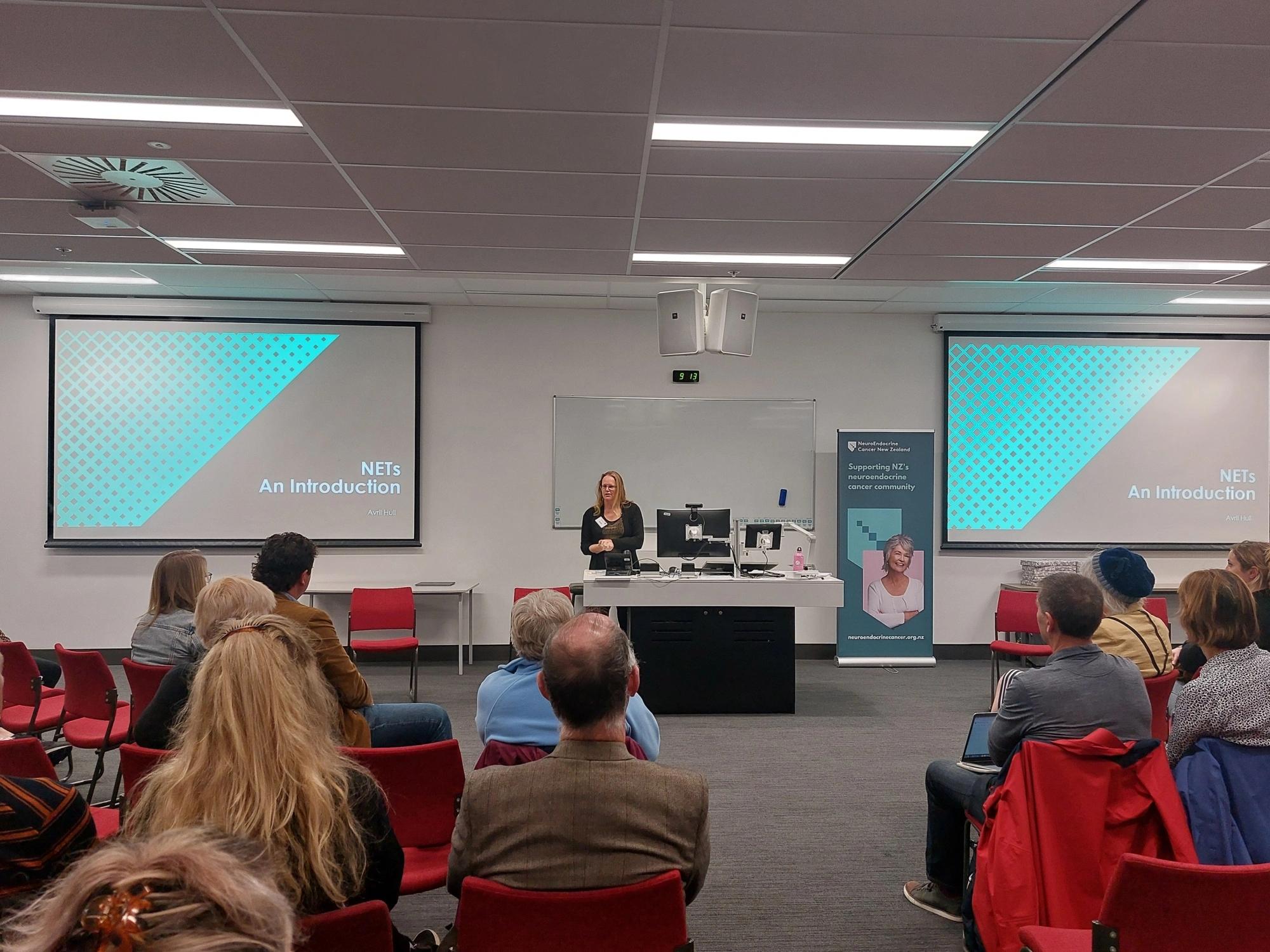
A speaker presents to a seated audience at a NECNZ Education Day
Education Day, 2025
A packed room at a NECNZ Patient Education Day reviewing scan imagery
Patient Education Day, June 2023
A full room listening to a specialist panel at the 2024 NECNZ Education Day
Education Day, 2024
More about us
  • Living with a cancer that no one has heard of is lonely and difficult. These cancers are complex, range from slow growing to very aggressive, and patients need accurate information, compassion and connection.
  • Founded in 2012 by a patient, we bring families and healthcare professionals together to provide education, raise awareness and support vital research.
  • We provide a voice for everyone living with neuroendocrine cancer in New Zealand, whether newly diagnosed or living with the disease for years.
  • We push for neuroendocrine cancer to be better understood and prioritised, through education, outreach and by influencing health policy.
  • Our support for research is accelerating progress towards faster diagnosis and treatments that cure.
  • We are 100% donor funded by the generosity of our community, individuals and organisations who get behind our mission.
  • The number of patients diagnosed with neuroendocrine cancer each year has more than doubled in the past ten years.5 Our work is more essential than ever.
  • We put patients and whānau at the heart of everything we do.
A picnic blanket under a flowering pōhutukawa above a beach at golden hour

Help us make the invisible visible

Earlier diagnosis, longer, better lives

By raising awareness together, we can support earlier diagnosis and longer, better lives for patients all over New Zealand.

For the public

  • Trust your instincts – you know your body better than anyone.
  • Keep the conversation going. If symptoms don’t improve, it’s okay to see your GP again. Keep a diary of your symptoms so you can talk them through together.
  • Speak up and spread the word. Talking about neuroendocrine cancer helps others get diagnosed sooner.

If you have ongoing symptoms from more than one group, ask your GP if neuroendocrine cancer has been considered.

For healthcare professionals

An earlier diagnosis means earlier treatment, more options and more years lived well

  • Know the signs of neuroendocrine cancer. Keep it in mind when speaking with patients.
  • Listen carefully. If someone keeps coming back with persistent symptoms, there may be more going on.
  • Think beyond the Usual Suspects. Consider if a neuroendocrine cancer diagnosis might fit unresolved or unexplained symptoms.
  • Look beyond appearances. Not everyone with neuroendocrine cancer looks unwell, even at advanced stages.
  • Share our checklist with your colleagues, visit our online resources and use these to support earlier diagnosis.
  • Build your knowledge. Neuroendocrine Cancer New Zealand offers a medical education module “Not Your Usual Suspects” that is accredited by the Royal New Zealand College of GPs. neuroendocrinecancer.org.nz/knowledge-hub/gp-education
Not Your Usual Suspects, NECNZ’s GP education module

Earlier recognition means better outcomes for everyone, as well as our healthcare system.

You can take action today

Share

Share this report and symptoms checklist on social media, in GP surgeries, community centres, local services and workplaces.

Download the report

Know the signs

Learn the symptoms, print the checklist and share it with your GP practice, whānau and workplace.

See the symptoms

Donate

Donate to support our work. We don’t receive any government grants or other funding and rely entirely on the generosity of our community to sustain and grow our services.

Donate

Find out more

Contact us to learn more about how supporting people affected by neuroendocrine cancer is at the heart of everything we do. Visit our website today to find out more.

Visit our website

Questions, or want to know more? Get in touch with our team.

Sources

Where the numbers come from

  1. INCA (International Neuroendocrine Cancer Alliance), SCAN 2025 – Survey of Challenges in Access to Diagnostics and Treatment for Neuroendocrine Cancer Patients. New Zealand patient results, from SCAN 2025 – a New Zealand reading (Neuroendocrine Cancer New Zealand, 2026).
  2. Singh S, et al. (2017). Patient-reported burden of a NET diagnosis: results from the first global survey of patients with NETs. Journal of Global Oncology 3(1).
  3. Neuroendocrine Cancer UK, Barriers to Diagnosis Survey, January 2021. As cited in The invisible cancer (2026).
  4. Neuroendocrine Cancer UK, The invisible cancer (2026). www.neuroendocrinecancer.org.uk/invisible-cancer/
  5. Te Aho o te Kahu Cancer Control Agency data using the QPI codes for neuroendocrine cancers.
  6. Neuroendocrine Cancer New Zealand estimate from a prevalence of 0.05997% (Wu P, et al. (2023), Endocrine Connections), about 3,212 people.
  7. White BE, et al. (2021). Evaluating cost-effectiveness in the management of neuroendocrine neoplasms. Based on data on the NHS tariff payment system in NHS Improvement Resources (NHS Improvement, 2019).

New Zealand comparison. The comparison with ovarian, liver, brain and stomach cancer is from Health New Zealand’s Cancer Web Tool. Accessed November 2026. www.healthnz.govt.nz/about-us/health-data/data-sets-and-collections/cancer-data-and-statistics/cancer-web-tool and tewhatuora.shinyapps.io/cancer-web-tool/

Some images are illustrative. This report is a New Zealand adaptation of The invisible cancer, published by Neuroendocrine Cancer UK in 2026. With thanks to our colleagues there.

Cover of The invisible cancer: Misdiagnosed. Misunderstood. Managed too late. A report from Neuroendocrine Cancer New Zealand, November 2026

Take it with you

The full report as a landscape A4 PDF you can print or share.