
Current research on hereditary phaeochromocytoma and paraganglioma (PPGL)
A University of Auckland team is working on earlier detection of hereditary PPGL and on new therapies for SDHB-mutated tumours – the gene mutation most often found in New Zealand patients, and more often in Māori.
Written by Dr Susan Richter & Dr Daniel Conole (University of Auckland)
Spoken: fee-oh-kroh-moh-sy-TOH-muh and par-uh-gang-glee-OH-muh
Hereditary phaeochromocytoma and paraganglioma (PPGL) is a rare form of neuroendocrine (NET) cancer that can run in families and cause tumours to form in the adrenal glands or along nerve pathways.
Researchers have identified around 20 different genes that can cause hereditary PPGL when one or more of the genes contain errors (known as mutations). These gene mutations can be passed down through families, but not everyone who inherits one of these genes will develop cancer. At the moment, researchers don't know why some people develop tumours while others with the same gene mutations do not.
In Aotearoa New Zealand, mutations in the gene SDHB (succinate dehydrogenase subunit B) are found often in patients with hereditary PPGL. International studies have shown that the presence of SDHB mutations, leading to a loss of the protein function, is associated with PPGLs that are more likely to spread around the body. Māori are more often affected by SDHB mutations than others.
A multi-disciplinary team of New Zealand cancer researchers is working on better detection and treatment. The team includes cancer biologist Dr Susan Richter, medicinal chemists Dr Daniel Conole and A/Prof Michael Hay, and endocrinologists A/Prof Marianne Elston and Dr Veronica Boyle.
Two research projects
The team's work is focused on two important clinical needs:
- Improving rates of early tumour detection, to prevent spreading
- Developing novel, more effective therapies for patients with PPGL that has already spread
1. Improving rates of early tumour detection
Led by A/Prof Marianne Elston, Dr Veronica Boyle and Dr Susan Richter
We are currently collecting clinical data from patients with PPGL from hospital databases to better understand who is most affected by this disease, how and at what age patients present at the clinic, what treatments they received and what the outcome was. We will use this knowledge to formulate action plans for clinical improvements. In addition, our team has been advocating for more gene testing of patients and families of affected individuals by engaging with clinicians. Awareness of a gene mutation within one's family is the first step to preventative action.
2. Developing novel, more effective therapies
Led by Dr Daniel Conole, Dr Susan Richter and A/Prof Michael Hay
Carrying a hereditary gene mutation means that the mutation is present in every cell of the body, including cancer cells. In the case of SDHB, cancer cells have mutations in both copies of the gene, the one inherited from the mother and the one from the father. This means that the cells cannot make normal, active SDHB protein. In most other cells in the body only one copy of the gene has the mutation, and the remaining copy of the gene makes normal, active protein. This difference can create specific vulnerabilities in cancer cells. Identifying these vulnerabilities provides the foundation for developing therapies that selectively target cancer cells while sparing healthy cells.
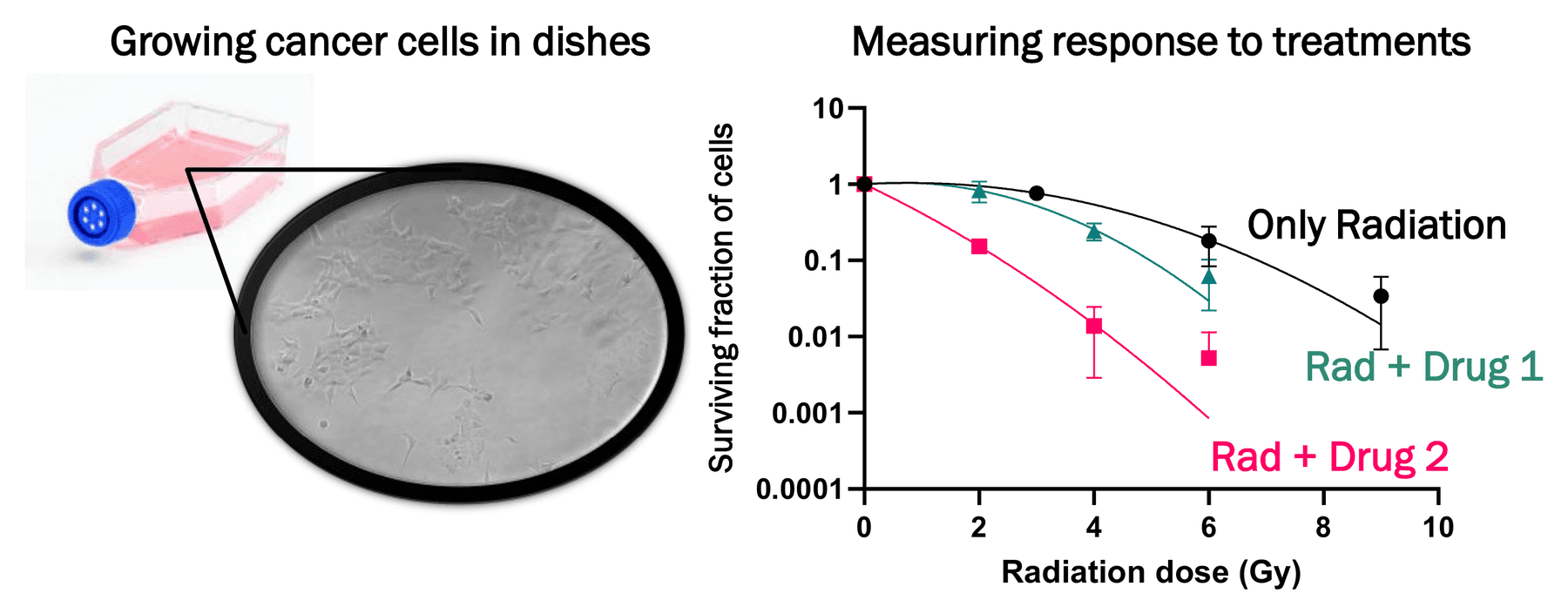
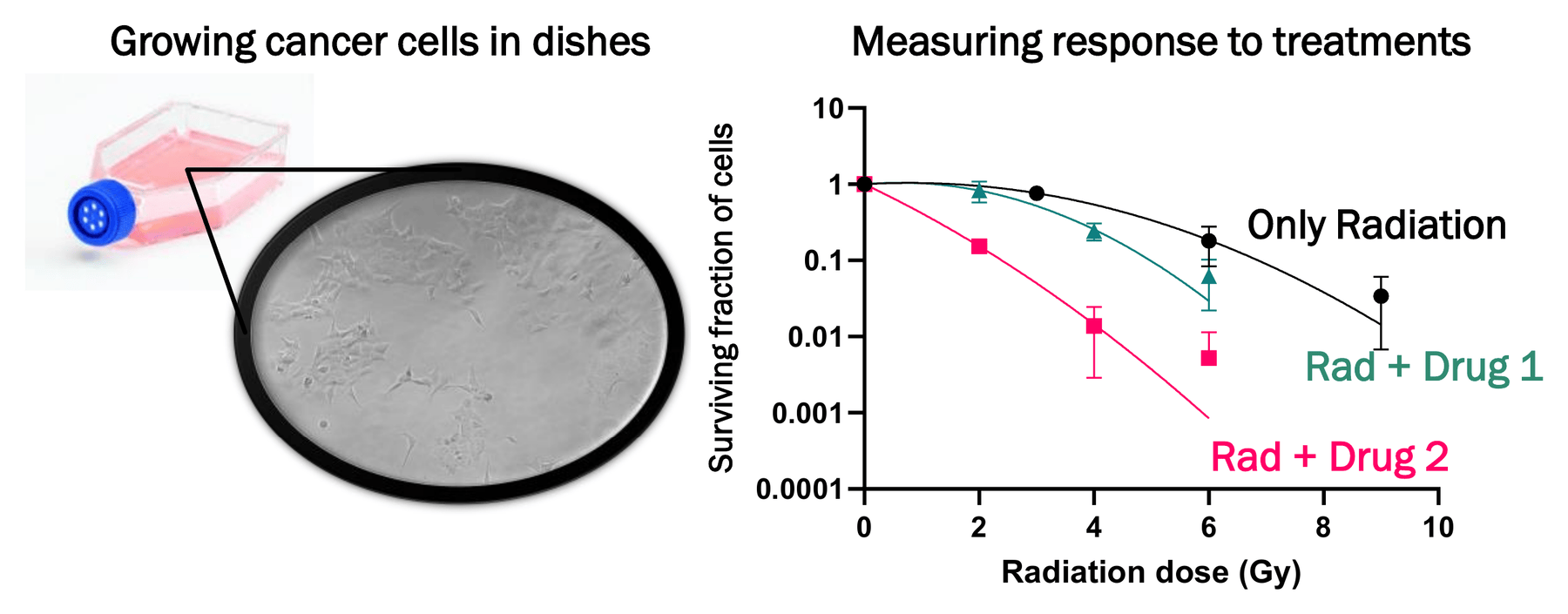
One focus is on improving already existing therapies, including PRRT (peptide receptor radionuclide therapy). We are testing compounds that may enhance killing of SDHB-mutated cancer cells when given together with PRRT. For these experiments, we grow cells with and without SDHB mutation in dishes and measure responses to different treatments (Figure 1).
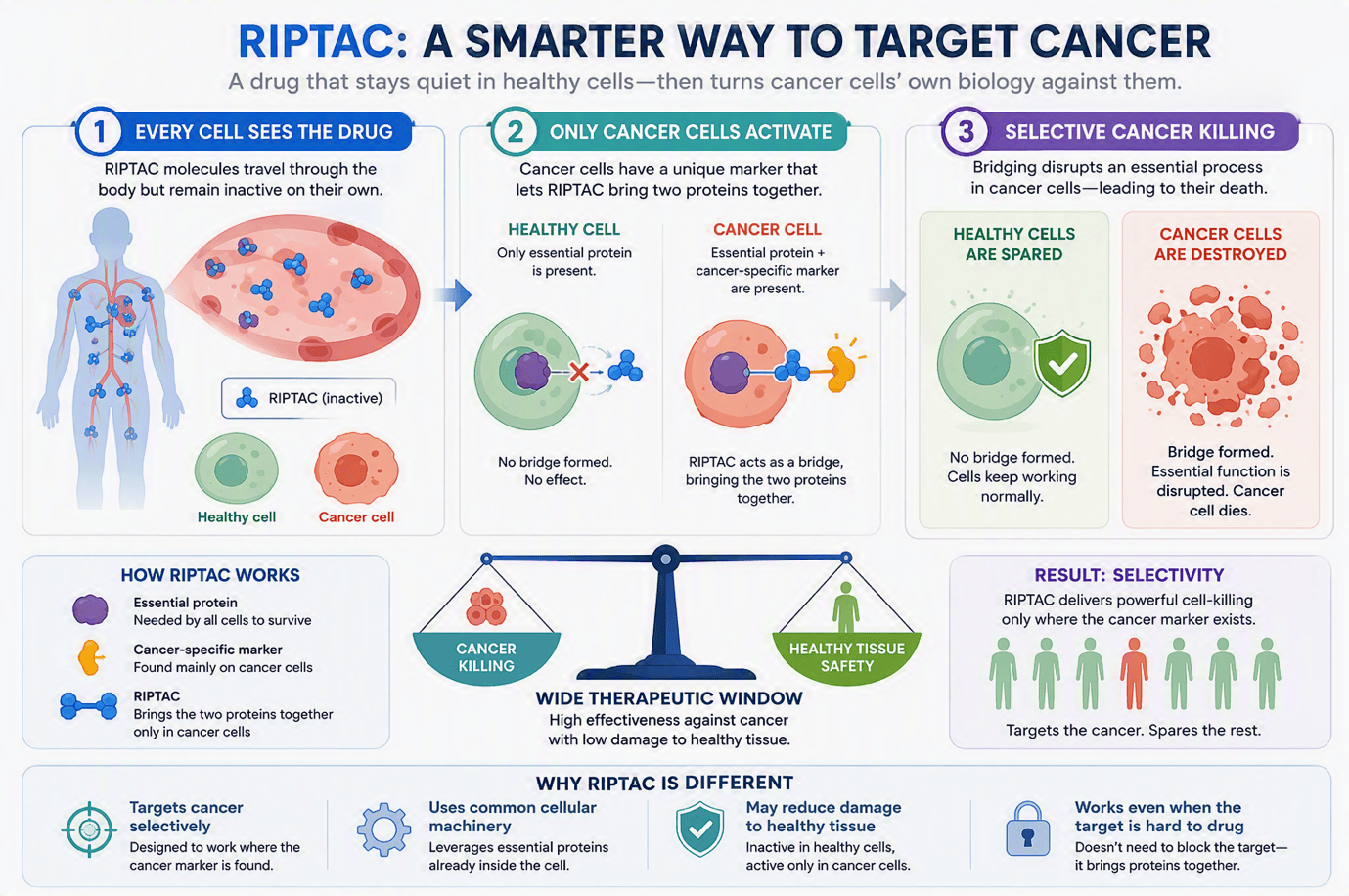
Another focus is on developing entirely new targeted therapies for SDHB-mutated PPGL. We are investigating an emerging drug technology known as Regulated Induced Proximity Targeting Chimeras (RIPTACs, Figure 2). These innovative molecules are designed to recognise proteins that are highly abundant in cancer cells and use them to trigger selective cancer cell death. Our goal is to harness RIPTAC to "hold-and-kill" PPGL cancers. If we can find the right two protein targets, we can get the therapeutic molecule to accumulate (hold) in cancer cells and then disrupt vital cellular processes (kill), while sparing the non-cancer cells.
We are also developing new laboratory models to better understand SDHB-mutated PPGL and to support the discovery of future treatments. We have successfully created new cell models that allow us to precisely control SDHB protein expression and study how different disease-causing SDHB gene variants behave. Using these models, we confirmed that mutant SDHB proteins are broken down more quickly than normal SDHB, helping to explain why these mutations contribute to cancer development. Importantly, we also found evidence that increasing the expression of some mutant forms of SDHB can partially restore normal cellular function, providing encouraging support for therapeutic strategies aimed at stabilising mutant SDHB protein. These new research tools will enable us to test potential medicines designed to rescue SDHB function and will help guide the development of more effective targeted treatments for SDHB-related cancers in the future.
Related resources
More like this →PRRT in NZ
Neuroendocrince Cancer NZ is an organisation dedicated to revolutionising the way that neuroendocrine tumours are diagnosed and managed in New Zealand.

Current research on MEN1
New Zealand researchers led by Dr Ana Ramachandran are uncovering how different MENIN isoforms help or hinder tumour development in MEN1 – the first in a growing strand of NET research on the site.