
MEN1 syndrome (Multiple Endocrine Neoplasia type 1)
MEN1 is a rare inherited condition that causes tumours in the endocrine glands – the parathyroids, pituitary and pancreas. What it is, what causes it, and how it is diagnosed.
Written by NECNZ team
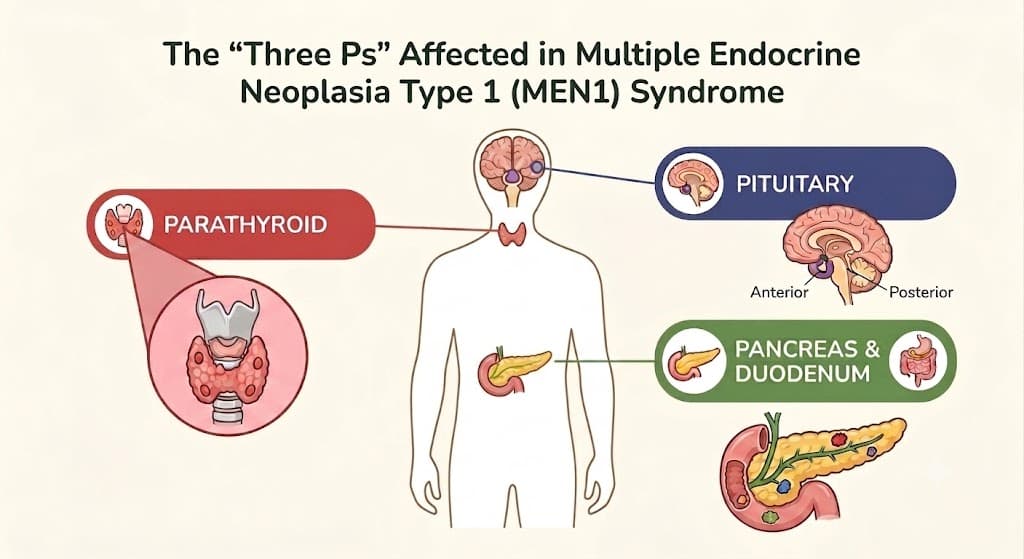
Multiple Endocrine Neoplasia type 1 (MEN1) is a rare, inherited (genetic) condition that affects the endocrine system – the body's network of glands that produce and release hormones.
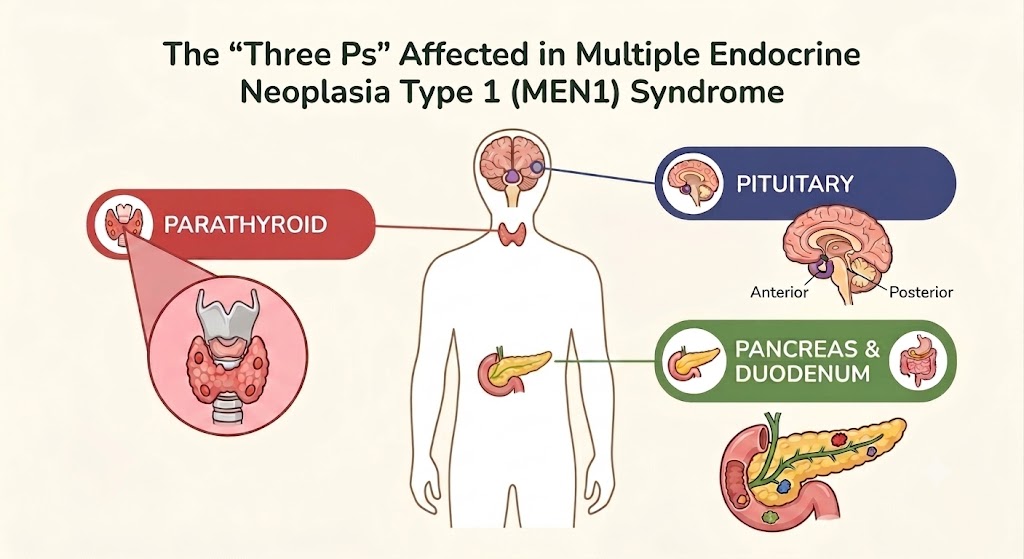
MEN1 syndrome causes tumours to develop primarily in three main locations:
- the parathyroid glands
- the pituitary gland
- the pancreas (and duodenum)
While these are the primary sites, tumours can occasionally appear in other areas as well (such as the adrenal glands, lungs, or stomach). In people with MEN1 syndrome, multiple tumours often develop at the same time.
The "Three Ps" of MEN1 syndrome
Parathyroid glands
Nearly all patients with MEN1 will eventually develop tumours in the parathyroid glands. These glands produce parathyroid hormone, which regulates calcium in the blood. Tumours cause excessive parathyroid hormone production – a condition called hyperparathyroidism – which is usually one of the earliest signs of MEN1 syndrome.
Pancreas (and duodenum)
Many patients develop neuroendocrine tumours in the pancreas or the duodenum (the first part of the small intestine). Functional tumours actively secrete hormones into the bloodstream, leading to specific symptoms such as low blood sugar caused by high insulin production. Other tumours are non-functional – they do not produce excess hormones. Because they don't cause symptoms in the same way as functional tumours, they are harder to detect and are often only found during screening, or because they press on nearby organs.
Pituitary gland
Patients with MEN1 syndrome often develop a tumour in the pituitary gland (located at the base of the brain). The pituitary is often called the "master gland" because it directs other hormone-producing glands. Pituitary tumours in MEN1 are usually non-cancerous (benign) adenomas.
What causes MEN1 syndrome?
In people with MEN1 syndrome, a variant (mutation) in the MEN1 gene prevents cells from making a fully functional protein called MENIN.
Think of MENIN as a brake pedal. In healthy cells, MENIN stops endocrine cells from growing out of control. Without a properly working MENIN protein, cells lose this "brake", allowing tumours to form.
How is MEN1 syndrome diagnosed?
A diagnosis of MEN1 syndrome is established using three distinct criteria:
- Clinical diagnosis – made when there are two or more MEN1-associated tumours.
- Familial diagnosis – made when there is one MEN1-associated tumour alongside a first-degree relative who has a clinical diagnosis of MEN1 syndrome.
- Genetic diagnosis – made if there is a germline mutation (present in every cell of the body) in the MEN1 gene, even in the absence of tumours.
In around 90% of cases, patients inherit a MEN1 mutation from an affected parent. Early detection and lifelong screening are vital for catching and managing tumours at the earliest possible stage.
Research on MEN1
New Zealand researchers are studying how MEN1 works at the genetic level, and what that could mean for patients. Read about their work in Current research on MEN1.
Related resources
More like this →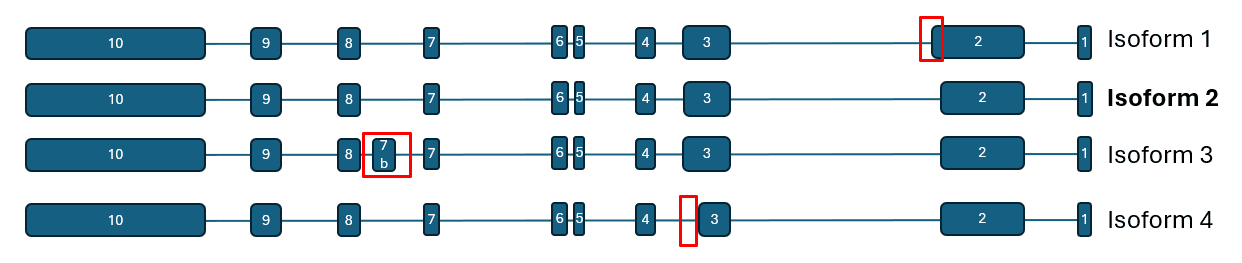
Current research on MEN1
New Zealand researchers led by Dr Ana Ramachandran are uncovering how different MENIN isoforms help or hinder tumour development in MEN1 – the first in a growing strand of NET research on the site.
SCAN 2025 – NET patient survey (New Zealand)
The New Zealand reading of the global SCAN 2025 survey of neuroendocrine cancer patients and clinicians – how our care compares with the world.
 Video
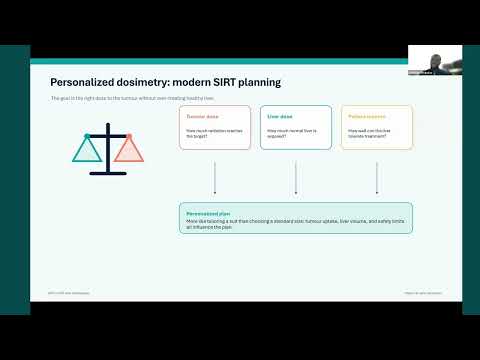
VideoSIRT – Dr Sofiullah Abubakar and Dr Michael Sunderland
A Zoom session on selective internal radiation therapy (SIRT), for anyone who could not join on the night.
 Video
VideoUnderstanding neuroendocrine care in New Zealand – Ben Lawrence
How neuroendocrine cancer care is organised in New Zealand, and what that means for the people in it.